Culture
Abai Village
Settlement founded by North Korean refugees, reached by the hand-pulled galsan ferry across the channel.
Abai Village · 1h30m · ₩500 ferry
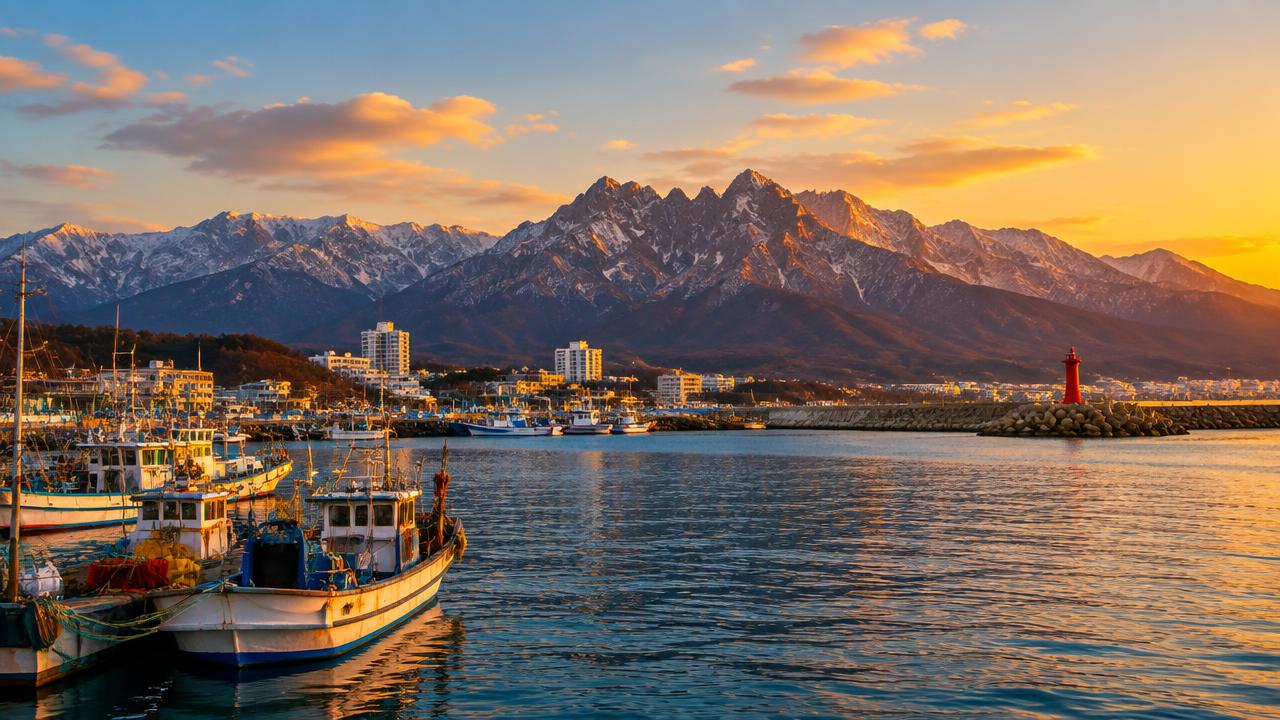
Sokcho sits between Seoraksan National Park and the East Sea, so a single day can mix granite peaks, a wide city beach and a fishing market. It is the classic Gangwon base for hiking, raw fish and the local dakgangjeong.
Settlement founded by North Korean refugees, reached by the hand-pulled galsan ferry across the channel.
Working fishing port with raw fish stalls and rows of fried-seafood vendors along the quay.
Granite peaks, temple trails and a cable car to Gwongeumseong Fortress, 20 minutes from central Sokcho.
Wide city beach with a pine-backed promenade and a lighthouse walk at the northern end.
Covered market famous for dakgangjeong stalls, dried fish and fresh seafood counters.
Lagoon with a flat 7.7 km walking and cycling loop and Seoraksan views at sunset.
Lodges and resorts at the Seoraksan park entrance, best for an early start on the mountain trails.
₩₩
Beachfront hotels and guesthouses on Sokcho Beach, walking distance to the market and the express bus terminal.
₩₩
Express buses from Seoul Express Bus Terminal reach Sokcho in about 2h20m; local buses and taxis connect the beach, the market and the Seoraksan entrance.
Door-to-door car with a driver; useful with luggage, children or a late-night arrival.
₩80,000-130,000 · 60-90 min
Seoul, Busan, Daegu and Daejeon all have English-signed metro systems. Tap a T-money card at the gate.
₩1,400 base fare · Per trip
Dense network with the same T-money card; transfers between bus and subway are discounted.
₩1,500 base fare · Per trip
Metered and inexpensive by international standards. Use the Kakao T app to avoid language issues.
₩4,800 base fare · Per trip
Seoul to Busan in about 2h40m, Jeonju in 1h40m. Reserve seats in advance on busy weekends.
₩30,000-60,000 · 1-3 h
Cheaper than KTX and reaches towns without a station; premium buses have three-seat rows.
₩15,000-40,000 · 2-5 h